
I’ll bet if you go to your pantry and start checking food labels you will be surprised at how many GMOs you’re eating. ‘Food’ companies are sneaking this trash into everything. The only warning is in small font located somewhere on the packaging.
I used to love Hellman’s mayo. I checked the label – ‘Contains Bioengineered Food Ingredient’. Tossed it.
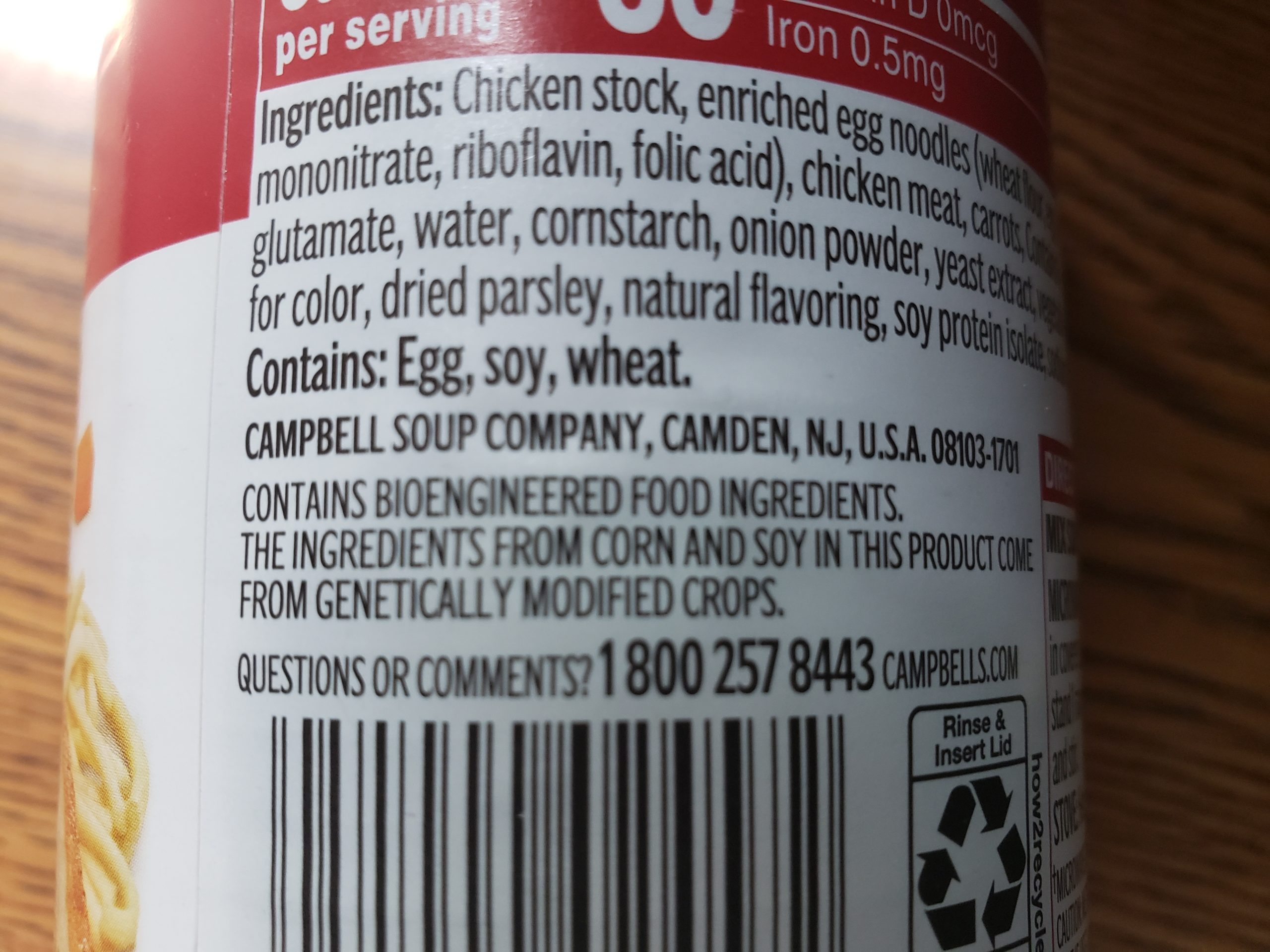
Campbell’s Homestyle Chicken Noodle Soup? ‘Contains Bioengineered Food Ingredient’. Tossed it.
Hidden Valley Original Ranch Dressing? Tossed it.
I missed those foods for a few weeks, but I don’t know the ramifications of rampant GMO consumption and so won’t participate in this food experiment. Maybe it will turn out to not be harmful. Maybe it is disastrous. I don’t care…I’m not eating it and I’m not feeding it to my family.
It is difficult to eliminate GMOs from your diet because they are in so many foods. GMO ingredients come from the main GMO plants – soybeans and corn. So anything that has soy, soybean oil, canola, corn, and corn oil will have GMOs. These are the ingredients to virtually all processed foods including chips, soups, sauces, ice cream, frozen foods, coffee creamer, desserts, candy, drinks, etc.
But it’s not just processed plant ingredients, at least those have to be labeled. What’s worse is that virtually all factory-farmed animals are fed GMOs. Those chicken tenders from your favorite fast food restaurant? Raised on GMOs. Chicken feed is made up largely of soybeans and corn, the two most genetically modified crops. That bacon you love? BBQ? Hamburger, milkshake, ice cream, steak? The animals were all grown with GMOs. But according to the USDA an animal that eats bioengineered feed is not considered bioengineered itself and doesn’t need to be labeled:
Q. Is an animal product considered a bioengineered food if the animal ate bioengineered feed?
- At 7 CFR 66.5, the Standard states that food produced from an animal fed bioengineered feed is not considered a bioengineered food solely because the animal ate a bioengineered feed.
- For example, the milk from a cow that ate bioengineered alfalfa is not considered a bioengineered food just because the cow ate bioengineered alfalfa.
This means that virtually every restaurant, unless it is labeled organic, is serving meat from animals raised on GMOs. They have taken over the food supply.
Check your pantry and fridge. I bet you’ll be surprised at how much GMO you’re eating.
Update:
So the reason why GMO warning labels are suddenly appearing on many food products is that the effective date of the GMO labeling rule was 2/19/2019 but the mandatory compliance date was not until January 1, 2022. Food companies have had 3 years to feed us GMO foods without telling us. Here is more information on GMO labeling from the USDA:
Q. What is the difference between the effective, implementation, and compliance dates?
- The effective, implementation, and compliance dates are as follows:
- Effective Date: This rule became effective February 19, 2019.
- Implementation Date: January 1, 2020.
- Extended Implementation Date (for small food manufacturers): January 1, 2021.
- Voluntary Compliance Date: Ends on December 31, 2021.
- Mandatory Compliance Date: January 1, 2022.
See if you can find the warning:
Buy my book of poetry or donate here – thank you!